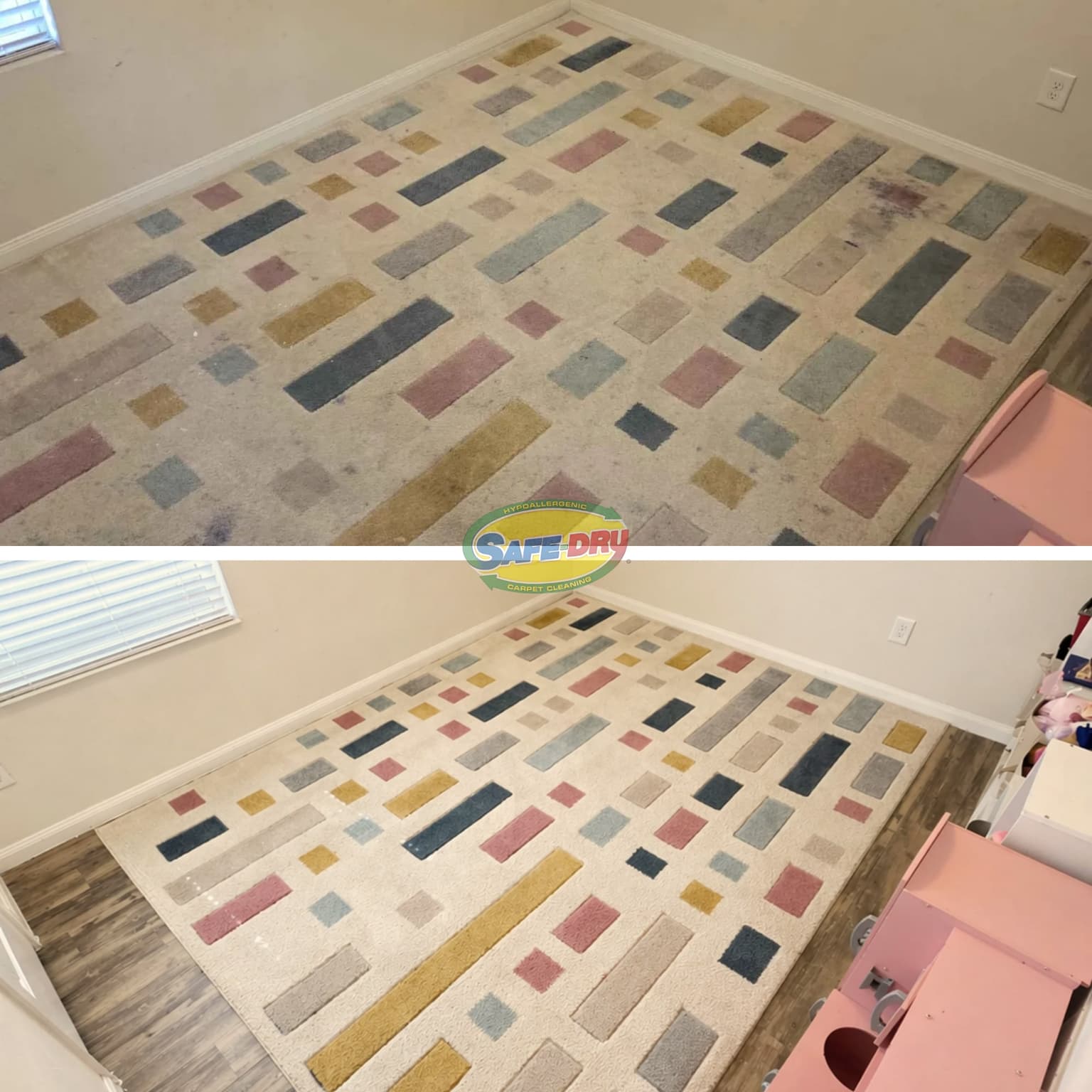
Most area rugs cost somewhere between $50 and $200 to have professionally cleaned, and the wide range is the honest part. A 5x8 synthetic rug from a big-box store and a hand-knotted wool rug from your grandmother's house are different jobs, and the price follows the work.
Four things move the number. Size, fiber, condition, and where the cleaning happens.
Size
Almost every cleaner prices by square footage, so a 9x12 costs more than a 4x6. Some quote per rug; most do the math on the dimensions. Measure yours before you call and you'll get a more accurate answer.
Fiber
Wool, cotton, silk, and other natural fibers need gentler cleaning agents and a slower pace. Harsh detergents can felt wool or bleed the dyes, so cleaners charge more for the care that avoids that. Synthetics (nylon, polyester, olefin, polypropylene) are more forgiving and usually sit at the lower end of the range, though cheap synthetics can fade if the wrong product goes on them.
If you don't know what the rug is made of, flip a corner and look at the label, or pull a single fiber from the fringe and burn it: wool smells like hair, synthetics melt into a hard bead. We've done the burn test in more than one driveway with the homeowner holding the lighter.
Condition
A rug that gets vacuumed weekly and has never seen a dog is a straightforward clean. A rug with pet urine, years of tracked-in Houston clay, or spots that were scrubbed with the wrong product takes more time and sometimes specialty treatment. Ask yourself:
- Is there visible staining?
- Does it smell when the room is closed up on a humid day?
- Has the pile gone flat or brittle in the traffic path?
- Is one side faded from the window?
Each yes nudges the price up. Pet odor treatment in particular is usually a line item on top of the base cleaning, because the urine has gone through the rug into the pad or floor beneath it. Fading is the one yes that doesn't cost extra, because nobody can fix it. A cleaning brings back color that's hidden under dirt; it can't bring back color the sun took.
Where it gets cleaned
This one matters more than people expect. Many rug cleaners pick the rug up, truck it to a plant, wash it, and bring it back in a week or two. That's a reasonable process for a badly damaged antique, and you pay for the transport and the turnaround.
We clean rugs where they lie, in your home, the same visit as the carpet if you want. Our in-home rug cleaning uses the same low-moisture carbonated process as our carpet work, adjusted for the fiber. It's soap-free, leaves no residue, and the rug is dry within the hour, so it goes right back under the coffee table. No pickup, no empty floor for two weeks, no truck fee. For oriental and wool rugs the technician tests for colorfastness first and works at a gentler setting.
We'll say plainly that the plant-wash model has a place. A rug that's been through a flood, or one with dye bleeding across the whole field, needs a full immersion wash that nobody can do on your living room floor, us included.
Before you call anyone
The rental machine is the other option people weigh. It runs about $30 for the day, plus detergent, and for a durable synthetic runner it can be fine. The hidden costs show up later: rental units over-wet the rug, the backing stays damp in our climate, and leftover detergent leaves a stiff, sticky feel that re-soils fast. On a wool rug, a rental machine can do damage that costs more to fix than a cleaning would have. Our advice is to skip it on anything you'd be sad to lose.
Spot-cleaning between professional visits is different. Blot spills right away with a white cloth, use cool water, no rubbing. It costs nothing and prevents most of the stains that end up raising the price later.
To get an exact figure, describe the rug to whoever you're calling: dimensions, material, age, and what's been spilled on it. If you'd like our number, the current $25 off rug cleaning coupon applies to in-home cleaning anywhere in the Cypress area, and a call to 281-746-6055 with the dimensions handy gets a quote on the spot. Measure the rug first, longest side then shortest, and check the back for a label while you're down there.