For most family homes in Cypress, low-moisture wins, and it isn't close. The longer version is below, because "steam cleaning" and "low-moisture" get thrown around by every company in northwest Harris County and almost nobody explains what the words mean.
What steam cleaning really is
What most people call steam cleaning is hot water extraction. A truck-mounted or portable unit sprays hot water and detergent into the carpet, agitates it, then pulls back as much of that water as the vacuum can manage. Actual steam plays almost no part. Think of it as a power rinse.
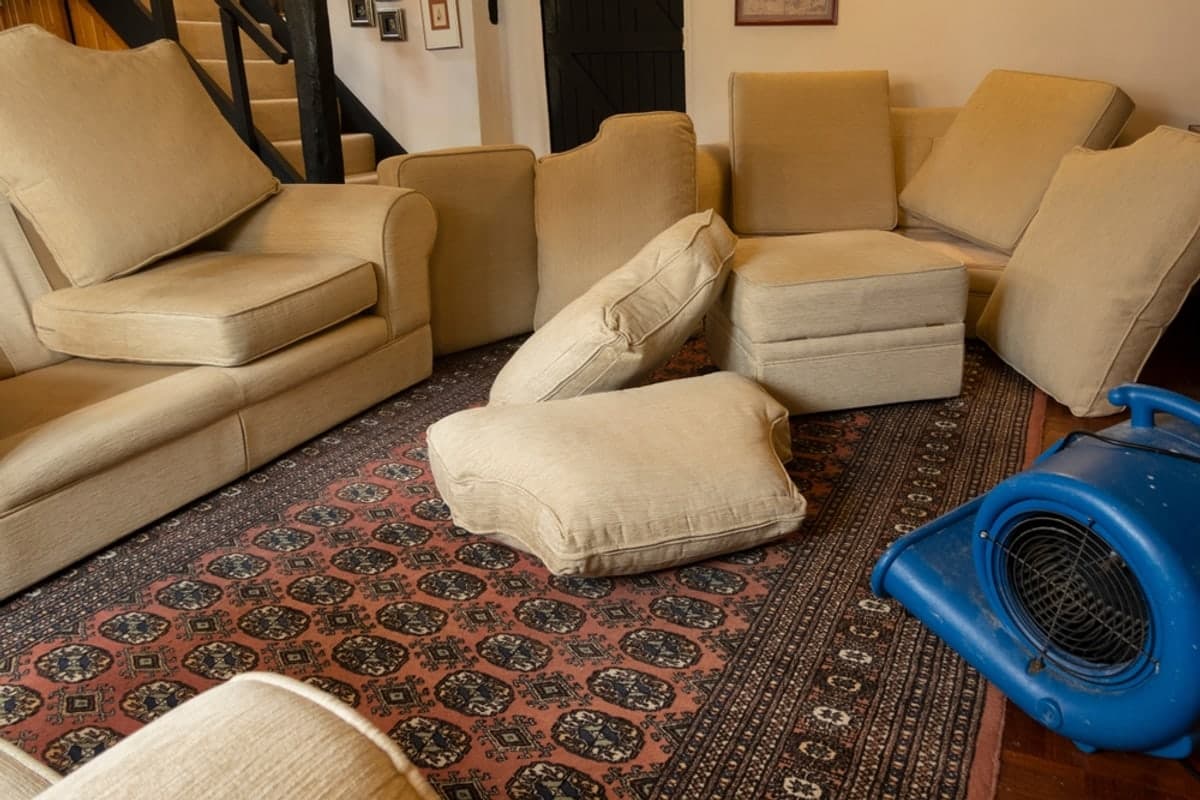
On a heavily soiled carpet with a good operator, it works. The trade-off is water. The carpet gets saturated down to the pad, and the vacuum never gets all of it back, so in our climate, with August humidity outside and the AC fighting it inside, that carpet can stay damp for the rest of the day and sometimes into the next morning, and a damp pad under Gulf Coast humidity is exactly how you get the musty smell people complain about a week after a "steam" job.
Then there's the detergent. If the rinse doesn't pull all the soap back out, a film stays on every fiber. Looks clean on day one. A month later the traffic lanes dull out again because dirt is bonding to the residue.
What low-moisture means when we do it
Our carpet cleaning puts down a carbonated solution and very little water. The carbonation does the lifting: bubbles push soil up off the fiber so the machine can pull it away, no soap involved. No soap means no residue. So little water means the pile is dry about sixty minutes after the machine leaves the room. Carpets stay clean up to 4x longer and dry up to 8x faster than with hot water extraction, and there's no wet pad under your feet in July.
That's the whole argument. Less water in a humid place, and nothing left behind to attract dirt.
Side by side
Water and dry time: extraction floods the carpet and leaves it wet for several hours to overnight. Low-moisture barely dampens it, and it's dry in roughly an hour.
Residue: with extraction it depends on the operator. With a soap-free process there's none to worry about.
Heavy soil: extraction has an edge on a carpet that hasn't been touched in five years and is holding mud, and we'll be upfront about it. A rental that's been neglected for years, a flushing extraction pass has its place there. Low-moisture handles normal household soil, traffic lanes, and dullness without the flood, which is what the carpet in a lived-in Cypress home with kids and a dog on it actually needs.
Pets: the method matters less than the treatment. Neither steam nor low-moisture removes urine on its own. The odor lives in the pad, and the only thing that fixes it is an enzyme treatment applied to the spot so it soaks through to where the urine sits. What low-moisture adds is a room that dries fast, so the dog is back on the carpet that afternoon.
Questions to ask any carpet cleaner
Before you book anyone, including us, ask four things. How long will the carpet be wet, and don't accept a vague answer. What's in the solution, and is it soap-based. How do you handle pet urine, because "we spray a deodorizer" means they don't. And what does the advertised special actually include, before you book on price alone.
Ask us the same four. Schedule online and mention the traffic lane you hate most; the 3 rooms for $88 special is three rooms with 300 square feet between them, and our answer to the first question is about an hour.