
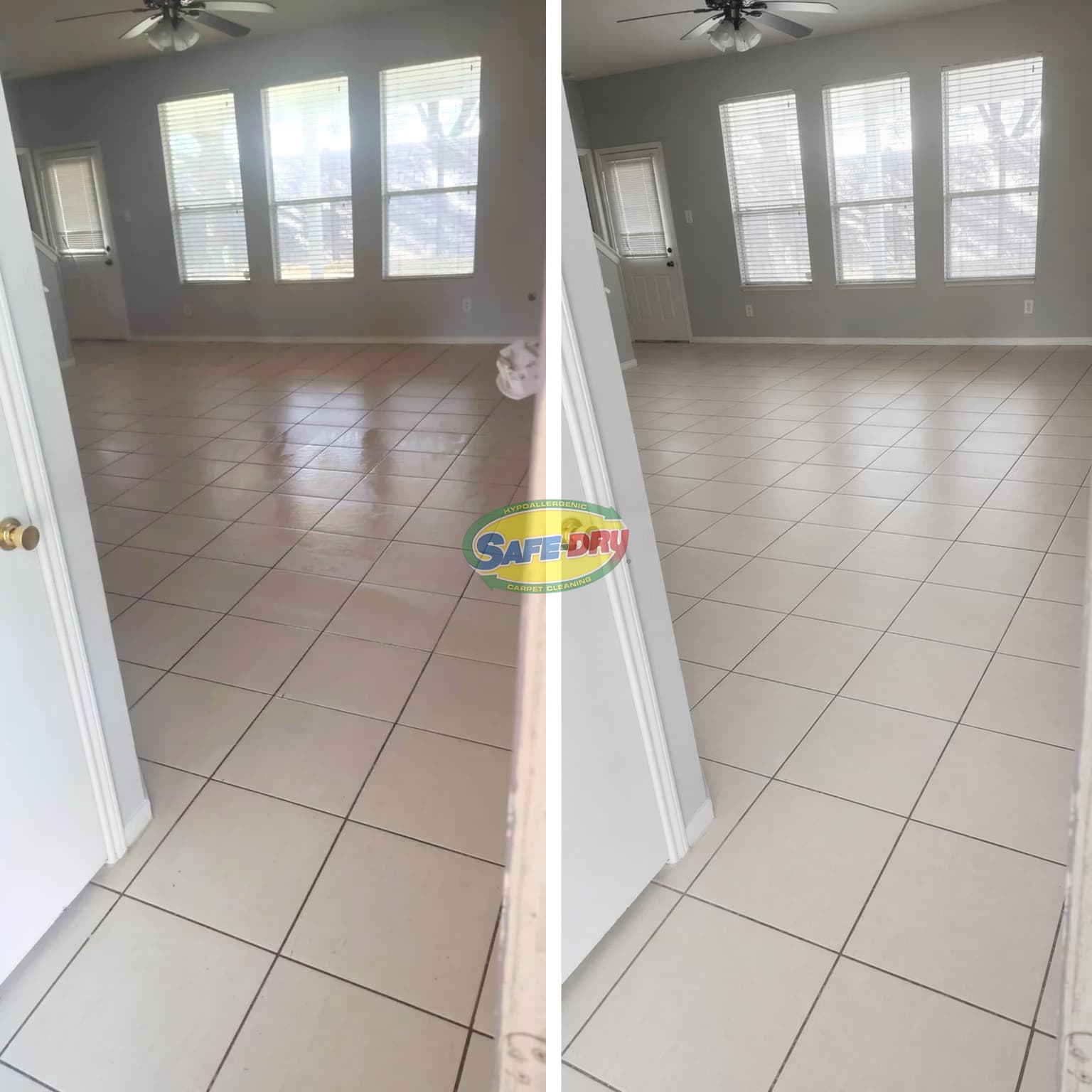
Your tile probably looks fine from standing height. Get down closer, in the kitchen or by the back door, and the grout lines tell a different story: a shade or two darker than when the house was new, dull at the edges, and no cleaner after you mop than before.
That's the normal state of tile in a Cypress home after a few years. Tile is glazed and shrugs dirt off. Grout is porous, so it drinks dirt in.
Why grout stays dark no matter how you mop
Grout has thousands of tiny openings. Fine dust, cooking grease, foot oil, and the clay-colored soil that rides in on every pair of shoes settle into those openings and stay. A mop wets the surface, moves the dirt around, and lets the dirty water run to the lowest point on the floor, which is the grout line. Then it dries there.
Two things make it worse. Too much water pushes soil deeper. And most floor cleaners leave a thin film you can't see on its own but that grabs dirt like tape. A year of that and the grout looks permanently stained when really it's just full.
High-traffic spots show it first: the path in from the garage, the hall to the bedrooms, the bathroom floor around the toilet. In the newer 77433 subdivisions, where construction dust is still working out of the vents, it happens faster. Look at a grout line in the middle of the kitchen, then one under the edge of the fridge. The one under the fridge is the color they all used to be.
What we do differently
Our tile and grout cleaning is a machine buffer process. After a walkthrough to find the worst lines, a pre-treatment goes down to loosen the grease and soil bonded into the grout, then a floor buffer with a pad works every inch of the grout line at a speed and pressure a hand brush can't match. The buildup lifts out of the pores and gets pulled away with the solution, and nothing sticky stays behind to attract the next round of dirt.
The moisture is controlled, so the floor is walkable within a few hours. You'll see the change before we're out the door: the lines go back toward their original color, and the whole floor looks lighter because the dark grid that was making it look dingy is gone. One limit to know about: grout that was stained by a dye, a rust leak under a fridge, or bleach damage is a color change in the grout itself, and buffing won't reverse it.
If you want the long version of why buffing beats scrubbing and acid cleaners, our sister site tile-done-right.com walks through the method step by step.
What you can do between visits
Sweep or vacuum before you mop. Grit under a wet mop is sandpaper, and you're pressing it into the grout. A barely damp mop beats a soaking one every time. Use less cleaner than the bottle says; the residue does more harm than the dirt. Put a real mat inside the garage door and another at the back door. Hit the darker lines early, while they're still a shade off, because a line that's been dark for two years is far harder to bring back.
Two habits to drop: stiff scrub brushes, which wear grout down and make it more porous, and bleach, which lightens the top and does nothing about the soil underneath. Bleach is the worse of the two.
When to call
If the grout stays dark after a proper mopping, the dirt is below where a mop reaches. If the floor feels slightly tacky after cleaning, that's residue. If one hallway looks a different color from the room it leads to, traffic has loaded that section. Any of those and it's time for the buffer.
Most Cypress kitchens do well with a professional tile and grout cleaning every year or so. Bathrooms and entries with heavy use, a bit sooner. A formal dining room you rarely walk across can go longer.
Grout gone dark again? There's a $45 tile and grout coupon running. Call 281-746-6055, say which room, and pull the rugs off the tile before we get there so the whole floor gets done.